



Why Legal Advertising Strategies Determine Which Law Firms Win
Legal advertising strategies are the methods law firms use to attract new clients, build trust, and stay competitive — spanning digital tactics like SEO and PPC, and traditional methods like billboards and print ads.
The core legal advertising strategies, ranked by impact:
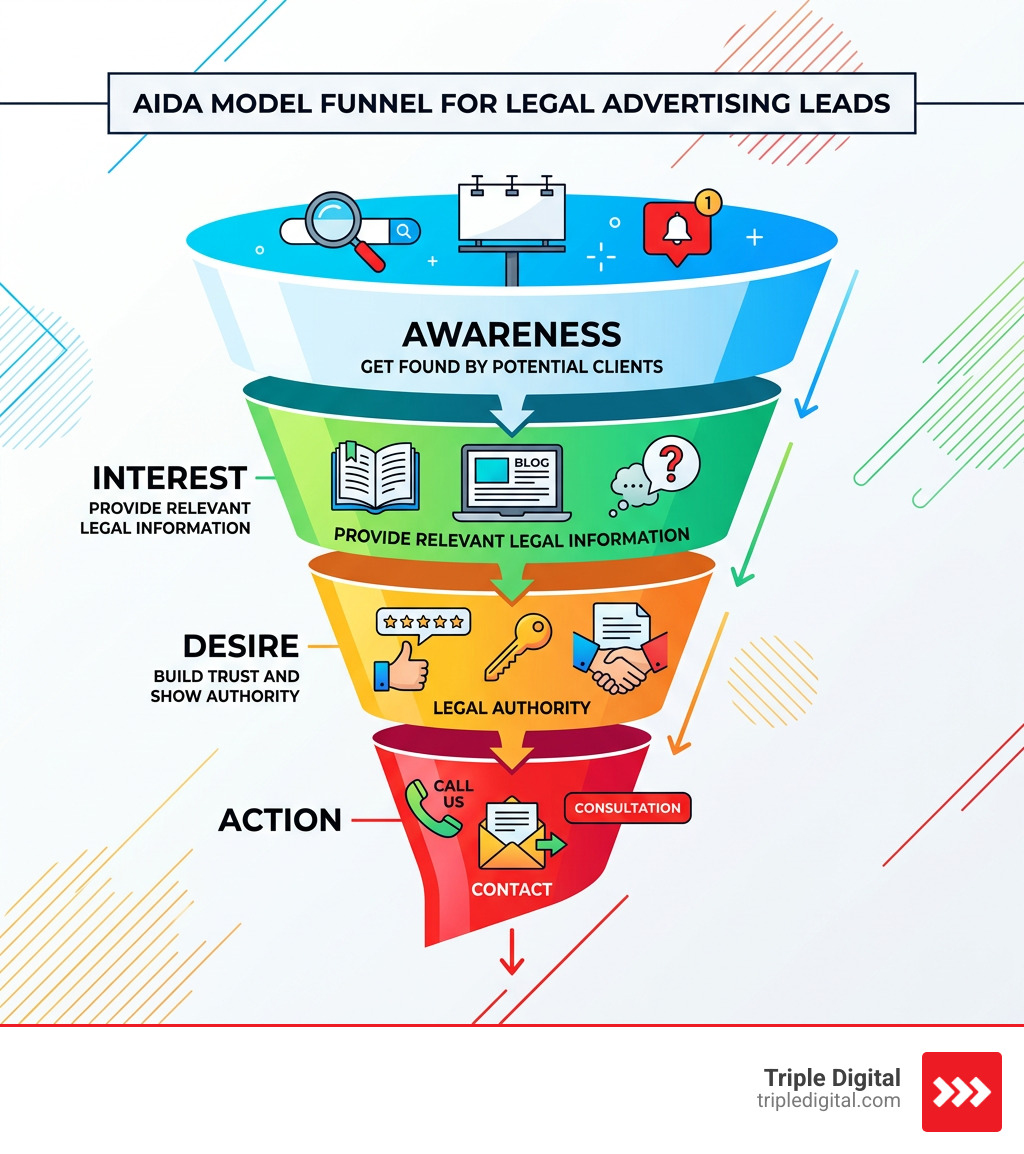
- Search Engine Optimization (SEO) — Get found when potential clients search for legal help
- Pay-Per-Click Advertising (PPC) — Appear at the top of search results instantly
- Local Service Ads (LSAs) — Capture high-intent local leads on a pay-per-lead model
- Social Media Advertising — Reach targeted demographics on Facebook, LinkedIn, and Instagram
- Content Marketing — Build authority with educational content that answers client questions
- Generative Engine Optimization (GEO) — Get featured in AI-powered search responses
- Local SEO & Google Business Profile — Dominate “near me” searches in your area
- Traditional Advertising — Billboards, TV, and print for broad local brand awareness
- Referrals & Testimonials — Leverage social proof to convert warm leads
- Email Marketing — Nurture prospects and stay top-of-mind with past clients
Most law firms are busy. Attorneys spend their days serving clients, not studying marketing trends. And yet, the firms that grow consistently aren’t necessarily the best lawyers in the room — they’re often just the most visible ones.
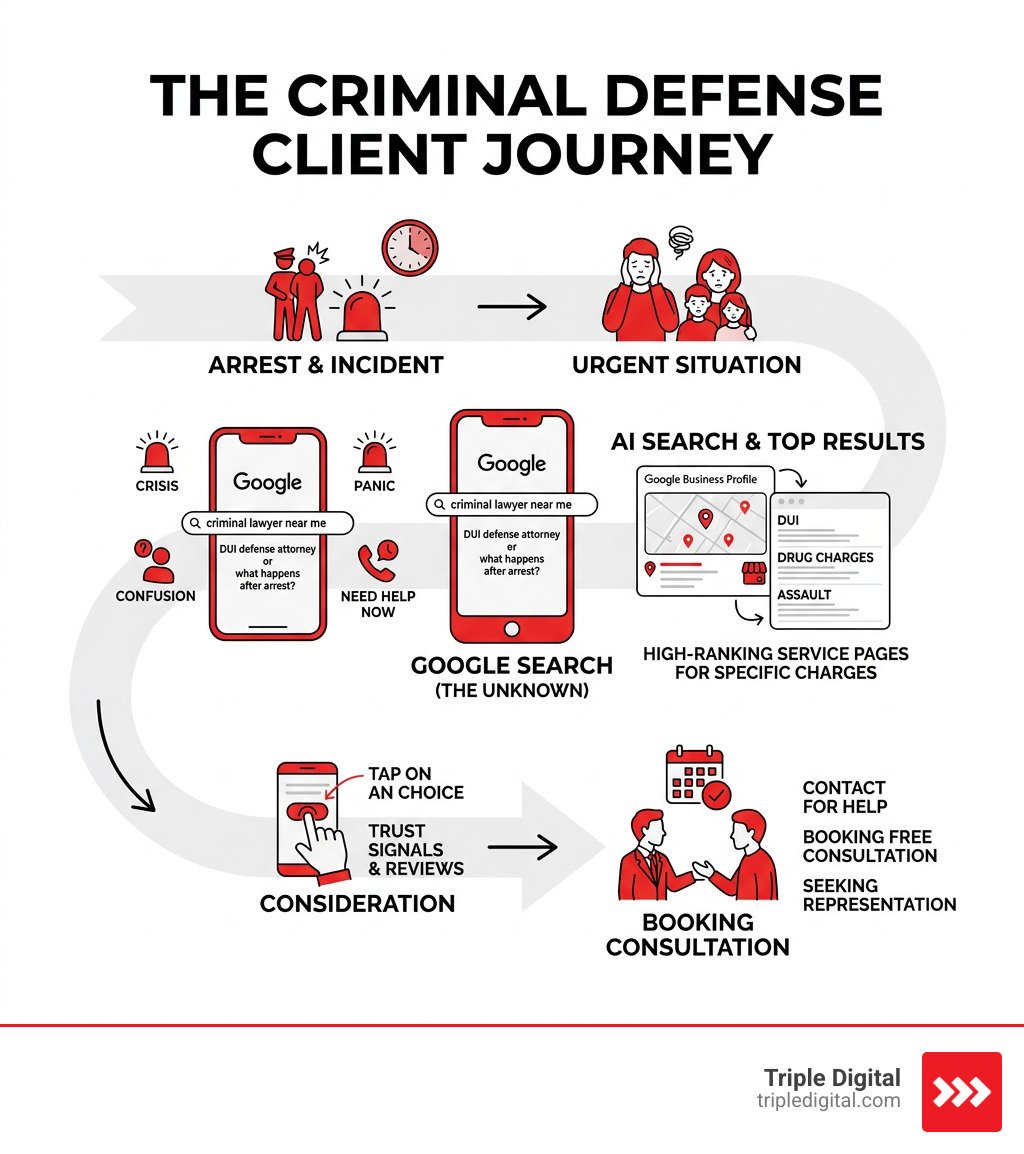
The legal market is crowded. One in three clients now starts their search for an attorney online. If your firm isn’t showing up where your potential clients are looking, a competitor is.
The challenge isn’t just doing marketing — it’s knowing which strategies actually move the needle for law firms, how to stay compliant with bar association rules, and how to make every advertising dollar count.
This guide breaks all of that down into a clear, actionable blueprint.
Easy legal advertising strategies word list:
Building the Foundation: Audience, Branding, and SMART Goals
Before you spend a single dollar on a billboard or a Google Ad, you need a solid foundation. In our experience at Triple Digital, the biggest mistake firms make is “spraying and praying”—sending out generic messages and hoping someone calls. To win, you need a precise Ideal Client Profile (ICP).
Who is your perfect client? If you are a personal injury firm in Houston, your ICP might be a working professional aged 25–55 who has been in an auto accident and is worried about medical bills. By creating detailed buyer personas, you can tailor your messaging to their specific fears and needs.
Next, you must define your Unique Value Proposition (USP). Why should a client choose you over the firm down the street? Maybe you offer 24/7 availability, or perhaps you have a “less fluff, more cases” data-driven approach. This identity should be consistent across all your Digital Marketing Strategies Law Firm.
Finally, stop setting vague goals like “I want more clients.” Use SMART goals (Specific, Measurable, Achievable, Relevant, and Time-bound). For example: “Increase website traffic by 20% and sign 10 new cases per month by the end of Q3.”
Essential Law Firm KPIs to Track:
- Cost Per Lead (CPL): How much does it cost to get one person to call or email?
- Conversion Rate: What percentage of website visitors actually contact you?
- Cost Per Acquisition (CPA): How much marketing spend is required to sign one new case?
- ROI: Are you making more than you’re spending? (Aim for a 5:1 to 10:1 ratio).
Digital Legal Advertising Strategies for 2026

The digital landscape is moving fast. By 2026, the firms that dominate will be those that have mastered the balance between organic search and paid visibility.
Search Engine Optimization (SEO)
SEO is the “long game,” but it’s often the most profitable. Since 96% of people seeking an attorney use search engines, being on page one of Google is non-negotiable. There are many Reasons to Use Law Firm SEO, but the biggest is trust. Users trust organic results more than ads. Effective SEO involves technical health (fast loading speeds), high-quality content, and a strong backlink profile.
Pay-Per-Click (PPC) and Local Service Ads (LSAs)
If SEO is a marathon, PPC is a sprint. Google Ads allow you to appear at the very top of search results instantly. However, the legal industry has some of the highest costs-per-click in the world. This is why many firms are shifting focus toward Local Service Ads (LSAs). These are the “Google Screened” ads at the top of the page where you pay per lead (a phone call) rather than per click.
| Feature | Pay-Per-Click (PPC) | Local Service Ads (LSAs) |
|---|---|---|
| Payment Model | Pay per click | Pay per lead/call |
| Placement | Below LSAs, above organic | Top of the entire page |
| Trust Signal | Ad label | “Google Screened” badge |
| Control | High (keywords, ad copy) | Low (Google controls triggers) |
| Best For | Specific niche cases | High-volume local leads |
Mastering PPC and Social Media as Legal Advertising Strategies
To truly maximize your legal advertising strategies, you cannot ignore social media. While someone might not go to Facebook specifically to find a lawyer, they do spend hours there every week.
Google Ads & Retargeting: The most effective way to use PPC is through retargeting. Have you ever visited a website and then seen ads for that company everywhere you go? That’s retargeting. Since most legal consumers don’t hire an attorney on their first visit, retargeting keeps your firm top-of-mind while they make their decision.
Facebook & Social Media: Social media marketing is the future for lawyers because most people perform research on their smartphones. The Verdict is In: Are Facebook Ads a Win for Your Law Firm? The answer is a resounding yes, especially for practice areas like personal injury, family law, and estate planning. You can see How Facebook Advertising Can Bring Traffic to Your Website by targeting specific demographics, interests, and even geographic zip codes.
LinkedIn Targeting: For B2B legal services or high-net-worth estate planning, LinkedIn is king. It allows you to target users by job title, industry, and seniority. Understanding How Can Social Media Drive Traffic to Law Firm Websites? involves moving users from “likes” to “leads” by offering valuable whitepapers or webinars.
Integrating GEO into Your Legal Advertising Strategies
As we move toward 2026, a new player has entered the field: Generative Engine Optimization (GEO). With the rise of AI tools like ChatGPT, Perplexity, and Google’s AI Overviews, people are no longer just typing keywords; they are asking complex questions.
GEO involves optimizing your content so that AI models “recommend” your firm. This requires:
- Semantic Content: Writing in a natural, conversational tone that answers specific questions.
- Authority Signals: Ensuring your firm is mentioned in reputable legal directories and news outlets.
- Structured Data: Using “schema markup” so AI can easily read your firm’s details.
Check out our Digital Marketing FAQ for Lawyers 2026 Edition for more on how “Answer Engines” are changing the way clients find us.
Local Dominance and the Power of Niche Specialization
Law is inherently local. Most clients want an attorney who is nearby and understands the local court system. This is why your Google Business Profile (GBP) is your most important digital asset.
To dominate the “Map Pack” (the three firms listed under the map in a Google search), you need:
- NAP Consistency: Your Name, Address, and Phone number must be identical everywhere online.
- Recent Reviews: Google prioritizes firms with steady, recent, five-star feedback.
- Local Citations: Being listed in local Houston business directories.
Don’t Stop Wasting Money: The Ultimate Guide to Local SEO for Your Law Firm by ignoring these basics. We also recommend geofencing, which allows you to serve digital ads to people who physically enter specific locations, like hospitals or courthouses.
The Power of the Niche
Specialization is one of the most underrated legal advertising strategies. Generalists often struggle to stand out. By focusing on a narrow niche—say, “Houston Truck Accident Lawyer” rather than just “Personal Injury”—you can charge higher fees and see better conversion rates. Clients want specialists who understand their exact problem.
Navigating Ethics and Traditional Advertising Methods
Legal advertising isn’t the Wild West. We have to follow strict rules, primarily the ABA Model Rules of Professional Conduct (specifically Rules 7.1 and 7.2).
- Rule 7.1: No false or misleading communications. You cannot guarantee results (e.g., “I will win your case”).
- Rule 7.2: Specific rules on how you can pay for advertising and referrals.
Maintaining Integrity in Advertising: Your Guide to Ethical Legal Marketing is essential for your firm’s reputation and your bar license. Always include necessary disclaimers, such as “Attorney Advertising” and “Past results do not guarantee future outcomes.”
Do Traditional Ads Still Work?
Yes! While we are a digital agency, we recognize that a hybrid model is often best.
- Billboards: Great for local brand recognition. Pro tip: Use a specific “Google search phrase” on your billboard to track its effectiveness via SEO spikes.
- TV and OTT (Streaming): High-impact for personal injury firms.
- Print: Still effective for reaching older demographics (Baby Boomers and Gen X) in local magazines or newspapers.
Scaling Success: Content, Social Proof, and Automation
Once you have leads coming in, how do you scale? You move from manual effort to automated systems.
Content Marketing: Content is the fuel for your SEO and social media. Instead of “selling,” try “teaching.” Write blog posts that answer the questions your clients ask during consultations. This builds E-E-A-T (Experience, Expertise, Authoritativeness, and Trustworthiness).
Social Proof: In 2025, 82% of clients check reviews before calling. Law Firm Marketing with Social Media is about more than just posting; it’s about showcasing your wins. Learn the art of From Likes to Leads: Mastering Social Media for Attorneys by sharing client testimonials (with permission) and case results.
CRM and Automation: If you don’t answer the phone, the lead goes elsewhere. Using a CRM (Customer Relationship Management) system allows you to automate follow-up emails and texts. This ensures no lead falls through the cracks.
At some point, you’ll have to ask: Should I Hire a Marketing Agency to Run My Law Firm? If you find yourself spending more time on Google Ads than on legal briefs, it’s time to outsource.
Frequently Asked Questions about Legal Advertising
What is the most effective advertising for law firms?
For immediate leads, Local Service Ads (LSAs) and PPC are the most effective. For long-term growth and the lowest cost-per-lead, SEO and Local SEO are the winners. The best strategy is usually a mix of both.
How much should a law firm spend on advertising?
Most established law firms spend between 5% and 15% of their gross revenue on marketing. If you are a new firm looking to grow aggressively, you may need to lean toward the higher end of that range.
Are traditional ads like billboards still worth it?
They are worth it for brand awareness, especially in high-competition areas like personal injury. However, they are difficult to track. We recommend pairing them with digital strategies so you can measure the “lift” in organic searches when the billboards go up.
Conclusion
Success in the legal industry today requires more than just being a great lawyer; it requires strategic moves. From mastering the “Map Pack” in Houston to preparing for the AI-driven search era of 2026, your legal advertising strategies are the engine of your firm’s growth.
At Triple Digital, we specialize in cutting through the noise. Based right here in Houston, TX, we help law firms move away from “fluff” and toward actual case acquisition. By leveraging AI and data mining, we ensure your firm isn’t just visible—it’s the obvious choice for your ideal client.
Ready to dominate your market? Check out our guide on the Top Law Firm Marketing Agency: How Firms Will Get More Cases in 2026 and Beyond or visit our services page to see how we can build your custom blueprint for success.